

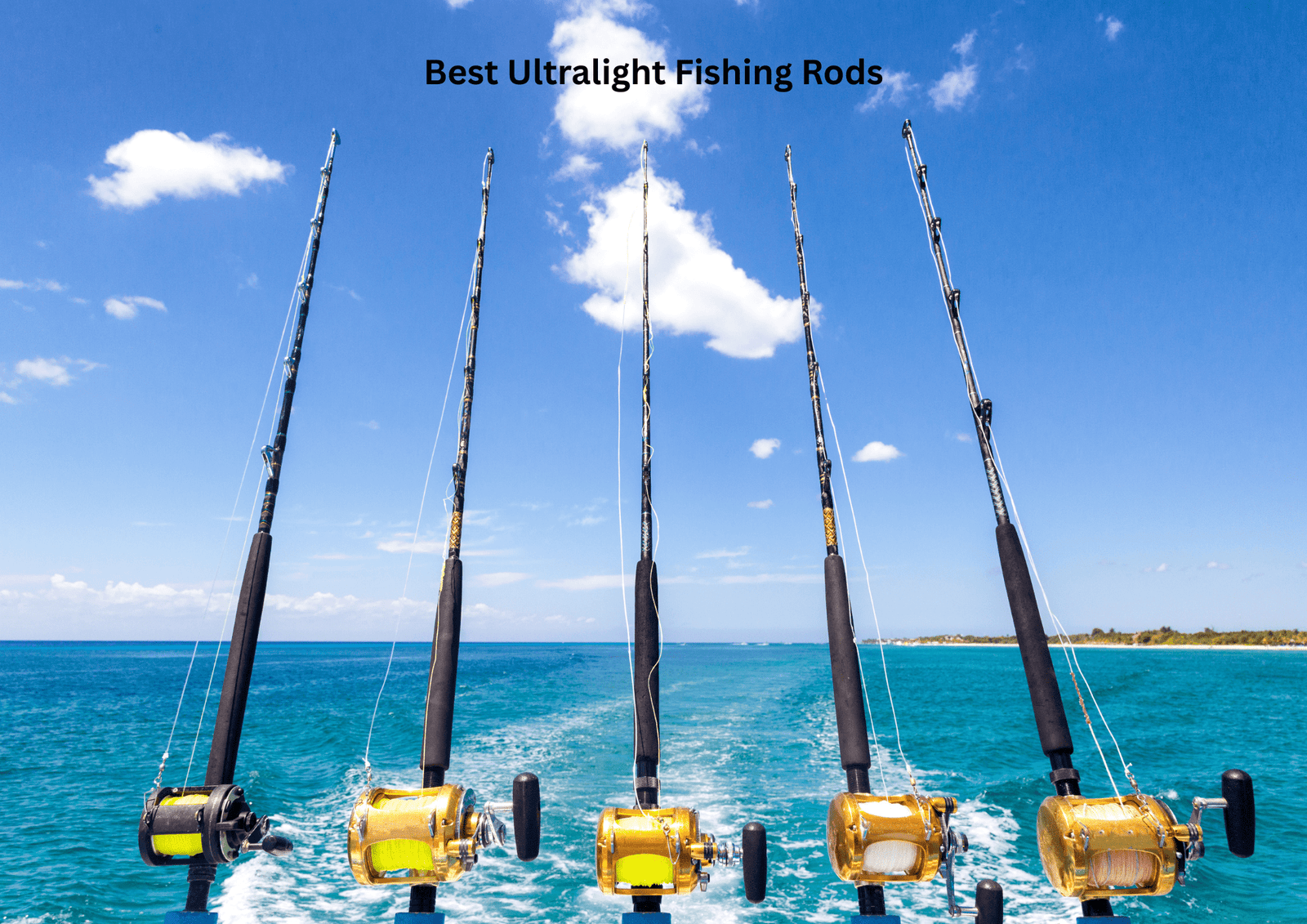
This blog will tell you everything you need to know about ultralight roads. The most important thing that most anglers make a mistake with is not choosing the right rod, so in this article we will tell you how to catch a good fish, from choosing the right rod.
What Is an Ultralight Fishing Rod ?
Ulta Light Fashion Rod is a very light power rating rod in itself. Every fisherman uses it and he also gets his work done with it. These rods are so technically designed that they are designed to handle lures and thin fishing lines very well. The most unique feature of the rods is that they are not designed for heavy use, but rather for fishermen who require finesse and delicacy. The material from which this rod is made is very strong and what is inside it is also flexible. This rod is made of graphite material. Let me also tell you that when even a small fish gets caught in the hook, even the slightest movement is felt by the road, so this is a very unique point of this ultra light fishing rod.
| Spec | Ultralight (UL) | Light (L) | Medium-Light (ML) |
|---|---|---|---|
| Lure weight | 1/32 – 1/4 oz | 1/16 – 3/8 oz | 1/8 – 1/2 oz |
| Line weight | 2 – 6 lb | 4 – 8 lb | 6 – 12 lb |
| Typical length | 4'6" – 6'6" | 5'6" – 7'0" | 6'0" – 7'6" |
| Best for | Trout, panfish, crappie | Bass, walleye, perch | Bass, pike, catfish |
| Material | Graphite / composite | Graphite / glass | Fiberglass / graphite |
What Is an Ultralight Fishing Rod Good For?
Wherever heavy rods do not work properly, become completely ineffective and do not catch fish properly, then ultra-light rods work very well for fishermen in these places.
Best species for ultralight fishing
Ultralight rods are purpose-built for smaller, finesse-oriented species: rainbow trout, brook trout, bluegill, crappie, yellow perch, rock bass, and small stream smallmouth bass. These fish respond to light presentations that heavier gear simply can’t deliver properly.
Ideal fishing environments
Small creeks, mountain streams, ponds, and shallow lake coves are where ultralight rods perform best. Tight casting quarters, clear water, and spooky fish all favor the subtle presentations that only ultralight gear enables.
Perfect for Small Fish
It is highly sensitive and specifically designed for catching smaller species. This makes it the absolute best choice for trout, panfish, and crappie. The flexible design ensures you feel every single bite instantly.
Sensitivity advantage
Ultralight rods transmit vibration from the lure all the way to the angler’s hand. You feel every rock, every current change, every hesitation in the strike. This tactile feedback is impossible to replicate on heavier gear and is why experienced finesse anglers won’t trade it.
The sport factor: Catching a 12-inch trout on ultralight gear is a completely different experience than the same fish on medium tackle. The rod loads deeply, the fish fights hard relative to the gear, and the whole experience feels more connected to the catch.
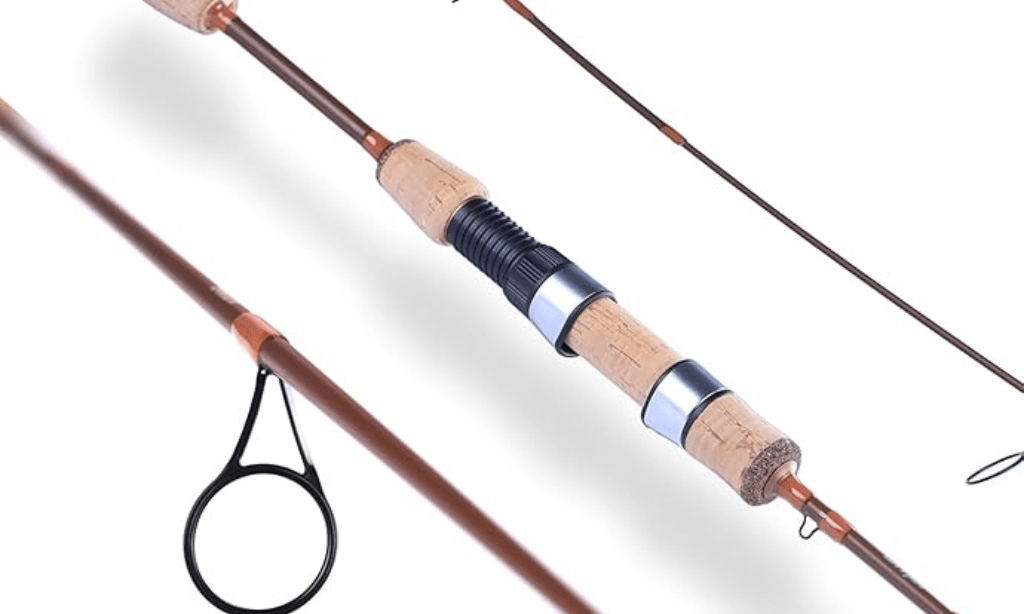
Ultralight vs Light Tackle: Key Differences
The difference between an ultralight fishing rod and a light rod is not just in power, but also in the way they fish, which is why the ultralight fishing rod has a lot of advantages.
When to choose ultralight over light
Choose ultralight when: you’re targeting fish under 2 lbs in clear water, fishing micro jigs or tiny spinners under 1/8 oz, or fishing in streams where a delicate presentation is essential. Choose light tackle when: your target species can exceed 3–4 lbs, you’re fishing heavier cover, or your lures are in the 3/16–3/8 oz range.
Common mistake: Using ultralight gear in heavy cover or fast current where you can’t control the fish. The light line and flexible rod make it very difficult to steer fish away from snags. Match the gear to the environment, not just the species.
Is a Light or Ultralight Rod Better for Trout ?
Now if you want to catch trout and you are wondering which rod you should use, then there is no better rod than the Ulta Let Fish rod.
The trout fish gets scared just by seeing the line and the bait in the water because it only eats small insects and small fish. It is very important that to catch trout, you need a very thin line and very small bait, which is only possible with a light fishing rod. This is the way to catch trout. If you put a small bait on a thin line, the trout can be better caught in your net and it will not be afraid. But on the contrary, if you use a thick line and a big bait to catch a trout fish, you will have a very difficult time catching it.
Stream trout vs lake trout
For stream trout (rainbows, brookies, browns), ultralight is almost universally superior. Short, accurate casts under overhanging brush, tiny lures, light line — this is exactly what UL gear is designed for. For larger lake-dwelling trout or trophy fishing situations where fish regularly exceed 5 lbs, a light-power rod may be more appropriate to handle the fight.
Rod action for trout
A moderate-fast action ultralight rod is ideal for trout. The faster tip helps with hook sets on finesse presentations, while the moderate mid-section absorbs the head shakes and runs of a fighting trout without breaking light tippet.
Can I Use an Ultralight Rod for Big Fish ?
You can do it, but you will have to take care of a few things to catch big fish.
Ultralight fishing rods have successfully landed largemouth bass over 5 lbs, walleye, channel catfish, and even small carp. The rod’s deep flex acts as a shock absorber, protecting light line from sudden surges. However, the fight must be managed carefully and the drag system becomes critically important.
What you need to make it work
A quality drag system:
Your reel’s drag must be smooth and properly set. Set it at roughly 25% of your line’s breaking strength. A jerky or improperly set drag will break light line instantly on a big fish’s first run.
Open water:
Fighting big fish on ultralight gear requires room to let the fish run. Heavy cover, timber, and rocks mean broken line. Find clean, open water before targeting larger species on UL gear.
Time and patience:
Don’t rush the fight. Let the rod work, let the fish tire, and keep steady pressure. A 5 lb bass on ultralight can take 5–10 minutes to land properly.
Proper rod angle:
Keep the rod bent at 45–90 degrees to the fish. This uses the full flex of the blank as a buffer. Pointing the rod at the fish removes all shock absorption and leads to break-offs.
What to avoid ? Don’t target big fish in heavy cover, don’t use ultralight for trolling or deep jigging, and avoid fishing near structure where a running fish can instantly reach a snag. The gear is capable, but it demands an open-water environment and patient technique.
How Do You Choose the Right Ultralight Rod and Reel Combination?
The rod and reel must work together as a balanced system. An oversized reel on a lightweight ultralight blank throws off the balance point and causes fatigue on long fishing days.
Ideal fishing environments
Pair ultralight rods with a 1000 (for the lightest setups) or 2000–2500 series spinning reel. Anything larger adds unnecessary weight and throws off the balance. Spinning reels are strongly preferred over baitcasters for ultralight work — the light lures won’t generate enough momentum for baitcasting without significant backlash issues.
Line selection
| Line type | Best for | Drawback |
|---|---|---|
| Fluorocarbon 4 lb | Clear water, trout, crappie | Stiffer in cold water |
| Monofilament 4–6 lb | Beginners, panfish, budget setups | More stretch, less sensitivity |
| Braided 6 lb | Sensitivity, finesse bass | Visible in clear water |
| Braid + fluoro leader | Best of both worlds | Requires knot tying skill |
Balance check
A properly balanced ultralight combo should balance at or near the front of the grip when rested on one finger. If it nose-dives toward the reel or tip-heavy, the components aren’t ideally matched. Balance reduces fatigue and improves casting accuracy significantly.